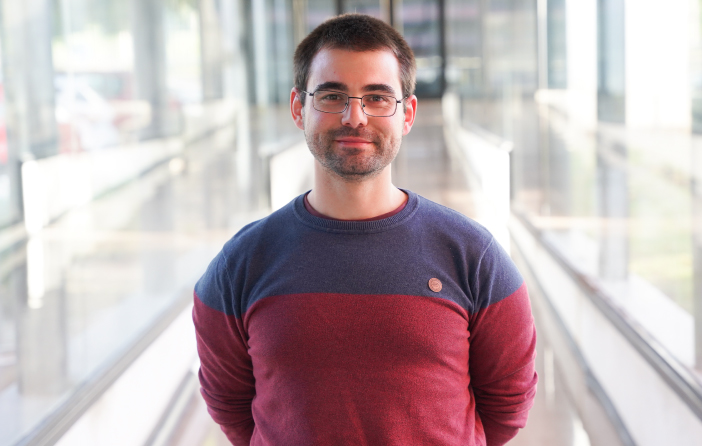


Eugenio Coronado, entrevistado en directo en À Punt
.jpg)
The director of the Institute of Molecular Science (ICMol), Eugenio Coronado, was interviewed live on August 1st on À Punt, the public television channel of the Valencian Community. During the conversation, he addressed key topics related to the research carried out at the institute, the training of young scientists, and the role of chemistry in today’s major technological and social challenges.
Coronado highlighted that ICMol has been awarded, for the third consecutive time, the prestigious "María de Maeztu Unit of Excellence" distinction, a recognition granted by the Spanish Ministry of Science and Innovation to only a very limited number of research centers in the country. “This seal acknowledges not only scientific excellence but also a combination of essential elements: unique research, in our case, molecular nanoscience, the training of new generations of researchers, and the ability to transfer knowledge to society. Together, these define what we understand as a center of excellence,” he explained.
Regarding the institute's strategic direction, he emphasized the growing interest in steering ICMol’s fundamental research towards practical applications aimed at solving real-world problems. “Science should help improve people's lives,” he stated. In this regard, he pointed out that molecular nanoscience offers solutions in areas such as environmental sustainability, advanced electronics, and the development of functional materials.
Coronado underscored the central role of chemistry in designing materials with tailored properties. “Chemistry gives us enormous versatility: it allows us to create materials with applications in a wide range of fields, from drug delivery systems and new pharmaceuticals to compounds that can capture environmental pollutants or improve food preservation,” he noted.
He also highlighted the potential of chemistry in advanced electronics. “The ability to design our own materials opens the door to innovative solutions for emerging technologies, such as quantum computing and neuromorphic electronics,” he said. He added that these materials are also key to the energy sector: “Some of them enable the development of highly efficient solar cells, manufactured through more sustainable and cost-effective processes.” Another example he mentioned is the production of alternative fuels like hydrogen, which do not rely on fossil sources, pointing to a broader shift toward sustainable technologies.
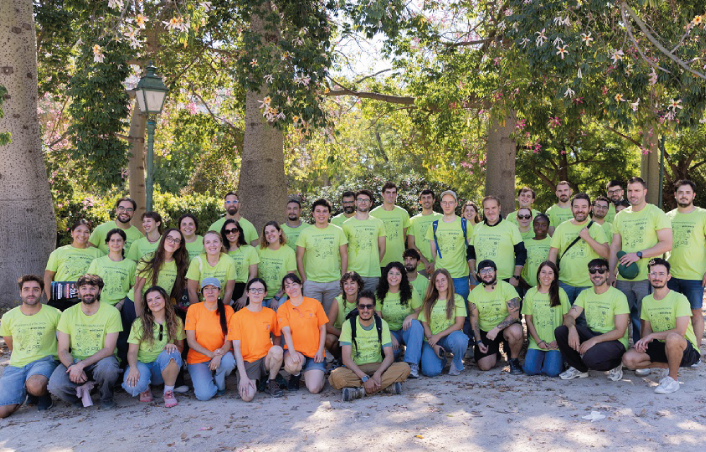
In the final part of the interview, Coronado addressed ICMol’s strong commitment to scientific training. He emphasized that many of the institute’s PhD graduates go on to pursue research careers at prestigious institutions both in Spain and abroad. “Mobility is beneficial, it enriches scientific careers and opens new opportunities. If we want to attract talent, we must be internationally competitive,” he stated. He also stressed the need for Spain to continue improving the conditions that allow researchers to thrive: “We are still facing structural challenges, especially in terms of funding. To compete with other countries, we must offer more attractive and stable research environments.”
The full interview is available at the following link:
???? https://www.apuntmedia.es/directe/directe-tv_136_1392524.html
.jpg)