

The Institute of Molecular Science celebrates its 25th anniversary
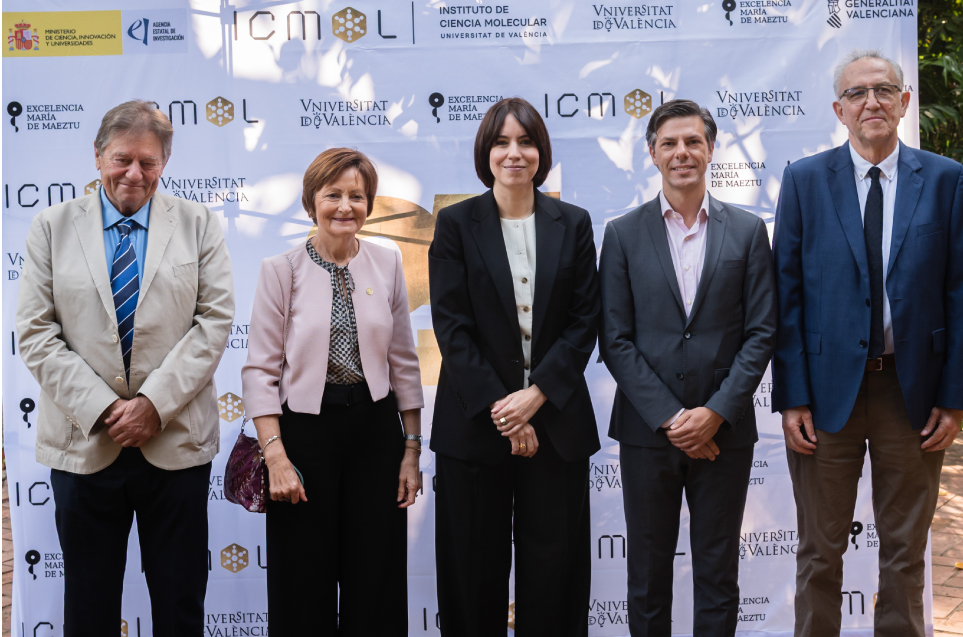
The Institute of Molecular Science (ICMol) held its traditional Scientific Conference this Wednesday, June 4. This year’s edition commemorates the 25th anniversary of the founding of this research center at the University of Valencia (UV), which has been recognized as a María de Maeztu Unit of Excellence. Featuring a program focused on molecular nanoscience and advanced materials, and a distinguished lineup of speakers — including two Nobel Laureates in Chemistry — the event was inaugurated by UV Rector M. Vicenta Mestre in the presence of Minister Diana Morant and key representatives from educational and scientific institutions.
Topics such as two-dimensional (2D) materials for environmental and biomedical applications, optoelectronic devices, organic solar cells, molecular nanomotors, and other cutting-edge advances in nanoscience and nanotechnology were presented and discussed in the Joan Plaça Auditorium at the University of Valencia’s Botanical Garden. This event is part of ICMol’s annual Scientific Conference, a science outreach initiative the center has been organizing since its inception in 2000.
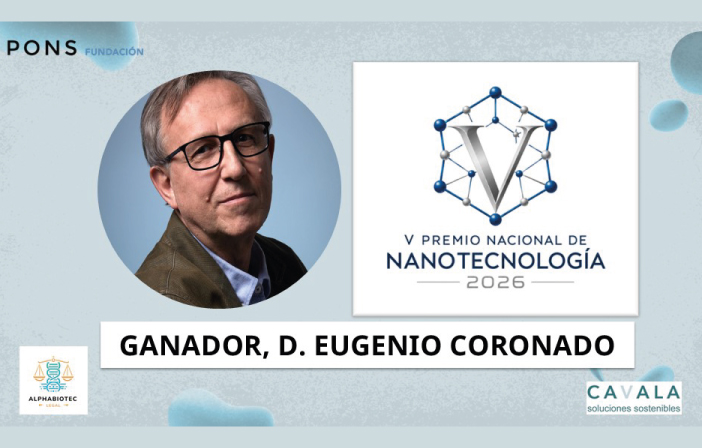
The day began with a commemorative ceremony marking the Institute’s 25th anniversary, featuring remarks from UV Rector M. Vicenta Mestre; Minister of Science, Technology and Universities, Diana Morant; Director General of Science and Research, Rafael Sebastián; Executive President of the Rey Jaime I Awards Foundation, Javier Quesada; and ICMol Director Eugenio Coronado, who was praised by the panel “not only for his current leadership, but for being the visionary founder of the institute and for making it an international benchmark in molecular science and advanced materials research,” as highlighted by the Rector. “Success is the result of hard work and perseverance,” added Rafael Sebastián, who thanked the ICMol leadership for building an internationally connected scientific community from Valencia.
Rector Mestre took the opportunity to emphasize the urgent need to support science with more financial and human resources and more agile and efficient management tools. “The world ahead demands more science, more knowledge, more innovation. Global challenges like climate change, energy transition, health, and digitalization require solutions based on knowledge, collaboration, and foresight. Supporting centers like ICMol is supporting a model of university committed to society and to its time,” she concluded.
“Science is a remedy against intolerance and scientific denialism,” said Diana Morant, quoting Javier Quesada. “Everyone here represents a space of resistance and democratic values,” the minister added, after reviewing recent crises that have affected science and the emergency and resilience measures taken to overcome them. “Investing in science works — it makes us a stronger and more productive country. That’s why we must continue working until we recover the position we held before the financial crisis.”
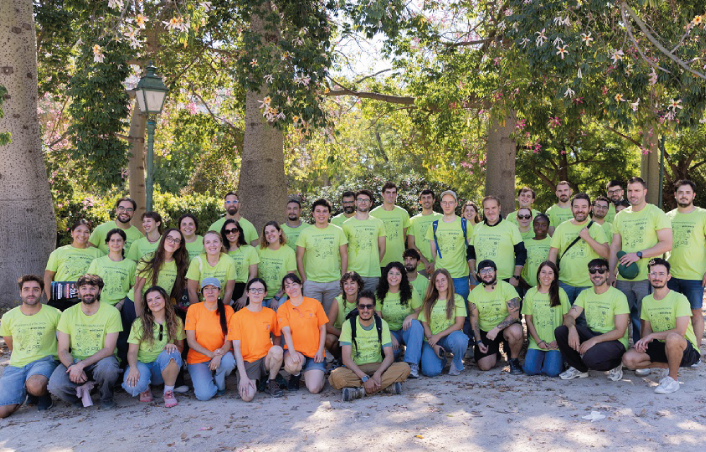
In his commemorative presentation, Eugenio Coronado expressed his gratitude to former UV Rectors — Pedro Ruiz, Francisco Tomás, and Esteban Morcillo — for their roles in the creation and development of ICMol. He highlighted the institute’s current standing as a María de Maeztu Unit of Excellence — a distinction it has received for the third consecutive time — and noted its growth to nearly 300 members, with 15 Ramón y Cajal contracts and a high concentration of ERC grants, among other achievements.
Also in attendance were Luis Viña, Director of the Royal Spanish Society of Physics (RSEF), and Mª Ángeles Herranz, Chair of the Specialized Group on Nanoscience and Molecular Materials of the Royal Spanish Society of Chemistry (RSEQ), representing their respective institutions.
The session continued with the traditional scientific talks, featuring seven presentations from renowned experts in fields related to molecular nanoscience, in a format aimed at high-level scientific dissemination.
The program, expanded from previous editions — extending to the afternoon prior to the main event — included the participation of two Nobel Laureates in Chemistry, Jean-Marie Lehn and Jean-Pierre Sauvage, both of whom have longstanding collaborations with ICMol and are regular contributors to UV events.
Other prominent speakers included Pablo Jarillo, a leading physicist at the Massachusetts Institute of Technology (MIT) known for his work on graphene and other materials; Petra Rudolf, former president of the European Physical Society and an active researcher on 2D materials for medical and environmental applications; Daniel Maspoch, Rei Jaume I Award winner in New Technologies, recognized for balancing basic and applied research in porous materials; Elvira Fortunato, a renowned researcher in sustainable electronics, two-time ERC Advanced Grant awardee, and former Portuguese Minister of Science and Technology; and Jean-Luc Brédas, one of the most respected theoretical physicists in the field of optoelectronic devices such as solar cells and OLEDs.
.jpg)