

An ICMol research team develops a material that activates chemical reactions with visible light and without noble metals
.jpg)
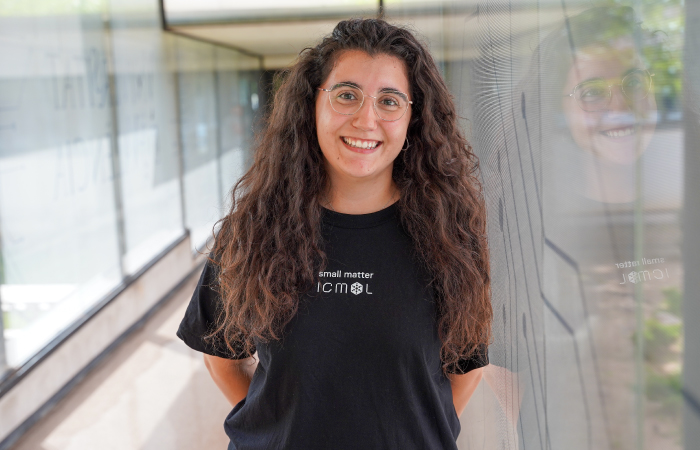
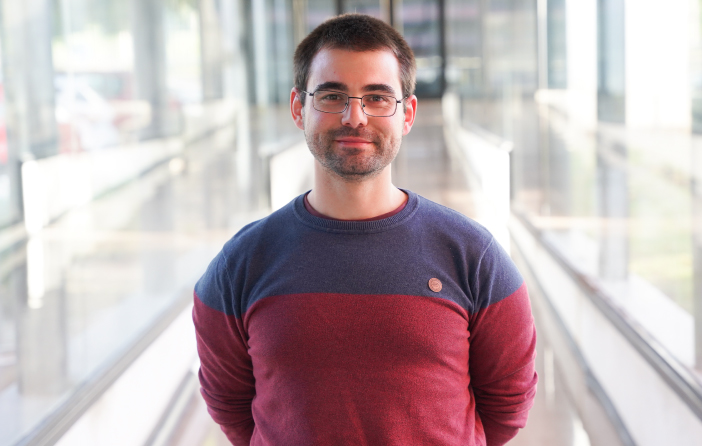
A study led by the Institute of Molecular Science (ICMol) of the Universitat de València presents a new strategy for designing more sustainable solid catalysts. The work, whose first author is Clara Chinchilla Garzón, demonstrates that the composition of a porous material can be used to control chemical processes driven by visible light, with potential future applications in pharmaceutical synthesis, fine chemistry and cleaner technologies.
Researchers at ICMol have developed a new porous material capable of promoting chemical reactions using visible light, without the need for noble metals, external additives or additional photosensitisers. The study, co-authored by Clara Chinchilla Garzón and Eva Rivera Chao, presents a new strategy for designing solid catalysts based on metal-organic frameworks.
The work, entitled Cluster-Enabled Control of Single-Electron Photoredox Catalysis in Reticular Frameworks, has Carlos Martí-Gastaldo and Natalia M. Padial as corresponding authors. The research describes a MOF-type material — MOF stands for Metal-Organic Framework — called MUV-1001(Fe), built from titanium and iron clusters. These crystalline structures combine metal nodes and organic molecules to generate highly porous, stable and chemically tunable materials.
Photoredox catalysis has become a highly useful tool for activating chemical reactions under mild conditions, using light as an energy source. However, many current systems rely on homogeneous catalysts based on noble metals such as iridium or ruthenium, which are expensive, scarce and difficult to recover from the reaction medium. In response to this challenge, the team involving Chinchilla-Garzón has demonstrated that it is possible to design a solid catalyst that is active under visible light and free of noble metals.
One of the main contributions of the work is showing that photocatalytic activity can be controlled by modifying the composition of the material’s metal cluster. The team compared different versions of the MUV-1001 family, with combinations of titanium and magnesium, iron, cobalt or nickel. Although all of them retain similar structures, the iron-containing variant showed a distinctive response: it absorbs more effectively in the visible region and promotes more efficient charge separation, a key aspect for the chemical reaction to take place.
The MUV-1001(Fe) material enabled single-electron transfer reactions and C-C bond formation under visible-light irradiation. Specifically, the article describes a decarboxylative Giese reaction, a relevant transformation in radical chemistry and organic synthesis, carried out without external photosensitisers, co-catalysts, additives or noble metals.
From a social perspective, this advance forms part of the search for more sustainable chemistry. The development of solid, recyclable catalysts activated by visible light may contribute, in the medium and long term, to reducing dependence on scarce metals and on chemical processes that require more energy or generate more waste. Although this is fundamental research, its results open up new possibilities for designing cleaner and more efficient processes in fields such as pharmaceutical synthesis, fine chemistry and the development of advanced materials.
The study also shows that the material retains its activity after several catalytic cycles and preserves its crystalline structure, reinforcing its interest as a heterogeneous and recyclable platform. According to the work, MUV-1001(Fe) could be reused in four consecutive cycles while maintaining activity above 90%, with no significant evidence of titanium or iron leaching into the reaction medium.
For FUNIMAT, these results highlight the potential of reticular materials as platforms for a new generation of photoredox catalysts. Rather than incorporating external components into the material, the strategy is based on designing the metal cluster itself so that light absorption, charge separation and electron transfer are integrated within the same crystalline structure.
The work includes the participation of national and international institutions, among them IMDEA Energy Institute, Instituto Superior Técnico of the Universidade de Lisboa, Universitat de València, University of Birmingham, Universidad de Granada, Palacký University Olomouc and VŠB–Technical University of Ostrava.
Article reference: Chinchilla-Garzón, C. et al. (2026). “Cluster-enabled control of single-electron photoredox catalysis in reticular frameworks”. Chem. https://doi.org/10.1016/j.chempr.2026.103074
.jpg)