
Clean Rooms |
Clean Room ICMol Building |
|
It is a class 10000 clean room, with a surface of 50 m2. The clean room is available and being used for the preparation of thin molecular films in a dust free environment, necessary for a flawless electronic characterization. The clean room is shielded from UV radiation coming from illumination. This protects sensitive materials during the whole fabrication-measurement process.
Vertical laminar air flow cabinet Model V70 from Telstar
 Vertical Laminar Flow Bench with containment to deliver an ultraclean laminar airflow over a working bench to protect manipulated products from dust, from environment contamination and from cross contamination in the working area. All over pressure zones are surrounded by under negative pressure to prevent any leak back into the room or the clean zones of the cabinet. An additional air flow enters from the front to create an air barrier which brings protection to operator and to lab environment. The unit is provided with two HEPA-14 filters, one for the downflow and another for the exhaust. 70% of the air is recirculated thus minimizing filter clogging and the other 30% is expelled through HEPA-14 filter at top of the unit.
Laminar flow cabinet BC-Technology Type BC-CAU-07-12
 Vertical Laminar Flow cabin equipped with active carbon filter to deliver an ultraclean laminar airflow over a working bench to protect manipulated products from dust from environment contamination and from cross contamination in the working area. The active carbon filter allows the operator to work with organic solvents and the additional air flow enters from the front to create an air barrier for vapor solvent flow to the room. The unit is provided with HEPA H14 filter.
Laminar flow cabinet
 Vertical laminar flow cabin equipped with a spin coater SUSS DELTA 80 with GYRSET.
This spin coater is a semi-automatic system designed to coat wafers and substrates in a size range up to 150x150 mm2. The GYRSET technology allow a slow rate of solvent evaporation during coating yielding to smooth-surface thin films, thanks to an automatic lid that covers the substrate and creates a solvent-saturated atmosphere. Multiple-steps recipes can be programmed for full control of coating conditions (speed, acceleration and time). The unit works in the speed range of 100-5000 rpm.
Spin coater, model KW-4a, Chemat technology
 Chemat Technologies model KW-4A is a compact spin coater for precise and uniform deposition of thin films and coatings (metal oxide thin films, polymer coatings and metal organic thin films).
It has a two-stage spin process; this allows dispensing at low speeds and homogenizing the coating at high speed. Stage 1: 500-2500 rpm (2-18 Seconds) Stage 2: 800-8000 rpm (3-60 Seconds) Several sample chucks are available to hold substrates from sizes ranging from 5x5 to 30x30 mm2.
Molecular thermal evaporators
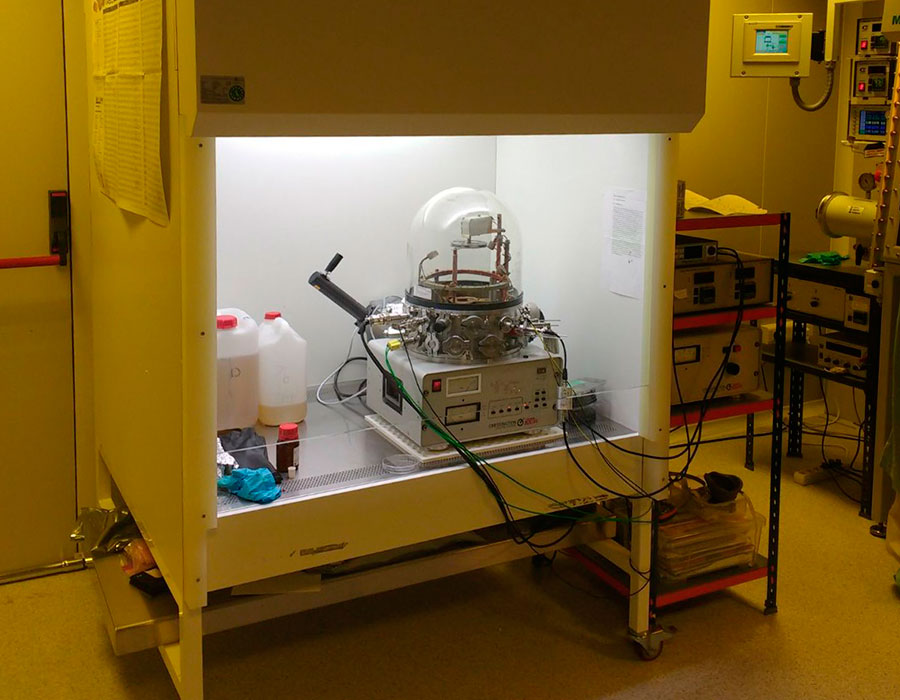
 High vacuum chambers integrated in a nitrogen glove box equipped with a water-cooled turbo molecular pump (pressure below 10-6 mbar). The deposition system consists in 6 individual thermal sources with alumina crucible and integrated shutter. Typical deposition rates varies between 0.01 and 50 Å/s, with a temperature range 50 °C - 800 °C and stability < 0.1 °C. The system is water cooled, with 3 temperature controlled power supplies, which allow co-evaporation of different materials. 3 water-cooled quartz crystal microbalance (QCM) sensors are used to measure the rate of material evaporation with a 1 Å resolution.
Metals thermal evaporators
 A vacuum chamber placed inside the glove box can achieve high vacuum, at pressures bellow 10-6 mbar. It is used for the thermal evaporation of metals (Al, Ba, Ca, Ag, Au) and other compounds (LiF, Cs2CO3) onto the surface of solids substrates.
Mainly used for the preparation of the anode/cathode on OLEDs and solar cells. It is a very precise tool for the evaporation of materials with high sublimation temperature. Thickness is monitored with an Edwards FTM7 film thickness monitor.
Surface treatment and cleaning of the surfaces by plasma technology system Flecto 10
 Plasma systems for cleaning or surface modification of small components and substrates. The system is can use different gasses (O2, N2, H2, Ar) for a variety of applications. As well as plasma cleaning and degreasing, etching and coating are all easily carried out with this system. The maximum power is 300 W, and the inner chamber dimensions are 190 x 190 x 320 mm. The plasma system is computer-controlled for virtualization of the process data. Process diagrams can be stored locally or via network.
UVO-Cleaner Jelight 42-220
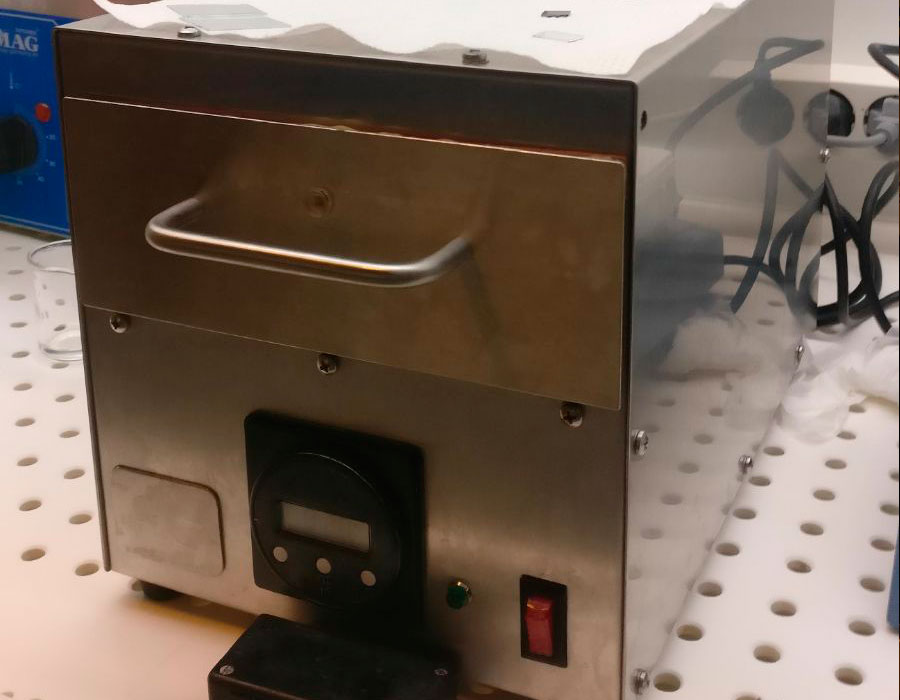 UVO-cleaner for surface cleaning of substrates used in opto-electronic devices. A mercury vapor grid lamp emits at 184.9 nm and 253.7 nm UV for generation of atomic oxygen and ozone. It has a capacity of approximately 15x15 cm tray size and it is coupled with an exhaust for ozone removal for operator safety.
Solar simulation MiniSun (ECN, the Netherlands)
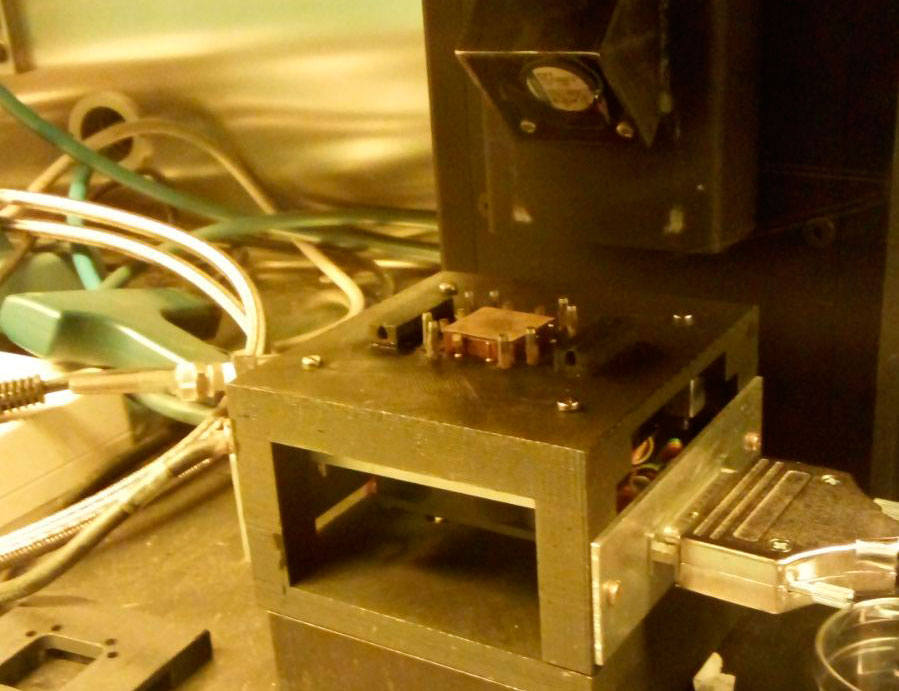 A solar simulator for characterizing solar cells in lab scale in inert atmosphere. The system is able for measuring the external quantum efficiency (EQE) and current density-voltage (J-V) characteristics of solar cells. The EQE is estimated using the cell response at different wavelength (from 350 nm to 1150 nm) measured with the white light halogen lamp in combination with band-pass filters. The J-V characteristics are obtained using a Keithley 2400 source measure unit.
Solar simulation (Abet Technologies)
 A solar simulator for characterizing solar cells in lab scale in air. The model is 10500, a compact and integrated system with an AM1.5G xenon arc lamp as the light source. Before each measurement, the exact light intensity was determined using a calibrated Si reference diode equipped with an infrared cut-off filter (KG-3, Schott). The J-V characteristics are obtained using a Keithley 2612A source measure unit.
Profilometer Ambios XP1
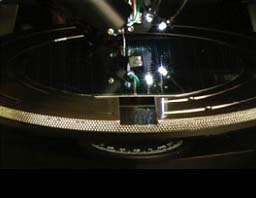
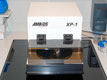 An Ambios-Technology profilometer model XP-1, placed on a vibration isolation table.
Sample Stage Diameter:140mm Scan Length Range: 30mm maximum Sample Thickness: 20mm maximum Vertical Resolution: 1Å at 10µm, 15Å at 100µm, 62Å at 400µm Vertical Range: 400µm maximum Magnification: 100X fixed objective with and attached CCD camera. Stylus Tip Radius 2.0 microns Stylus Force Range .05-10mg (programmable) Scan Filtering Low-pass, high-pass, band-pass, and adjustable filter The software performs calculation of surface roughness (Ra, Rq, Rp, Rv, Rt, Rz). |
Clean Room Scientific Park |
|
It is a class 10000 clean room, with a surface of 75 m2. The clean room allows the preparation of thin molecular films in a dust free environment, necessary for a flawless electronic characterization. It is equipped with a fume hood to perform chemical reaction with toxic reactants (size 1800x1000x2500 mm).
Langmuir trough KSV 300
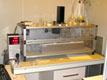 Computer controlled and user programmable Langmuir and Langmuir-Blodgett (LB) instrument for automated Langmuir film experiments and for unsupervised deposition of normal multilayers onto solid substrates.
LB technique is one of the most promising techniques to prepare thin films as it enables (1) a precise control of the monolayer thickness; (2) homogeneous deposition of the monolayer over large areas and (3) possibility to make multilayer structures with varying layer composition. The first step for the preparation of a LB film is the spreading of an organic solution of an amphiphile on the water surface. As the solvent is evaporated a monolayer of the amphiphilic molecules is formed on the water surface. The monolayer is compressed within two barriers. This gives rise to ordered 2D structures on the surface of water called Langmuir films. The Langmuir film is transferred onto a solid substrate by dipping the substrate up and down through the monolayer. After each dipping cycle two monolayers are transferred from the water surface to the substrate leading to multilayer thin films.
Langmuir trough Nima 702BAM
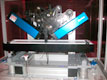 A computer controlled NIMA Langmuir trough (type 702BAM) equipped with a Wilhelmy plate can register surface pressure-area isotherms with a resolution better than 0.1 mN/m. Furthermore, the Langmuir monolayer surface is continuously imaged with 2 µm lateral resolution, during the compression isotherm, with a Brewster angle microscope type EP3-BAM from NFT-Nanofilm Technologie, GmbH (Göttingen, Germany). This microscope can also be used for imaging of the Langmuir-Blodgett (LB) films transferred onto solid substrates.
Brewster angle microscope
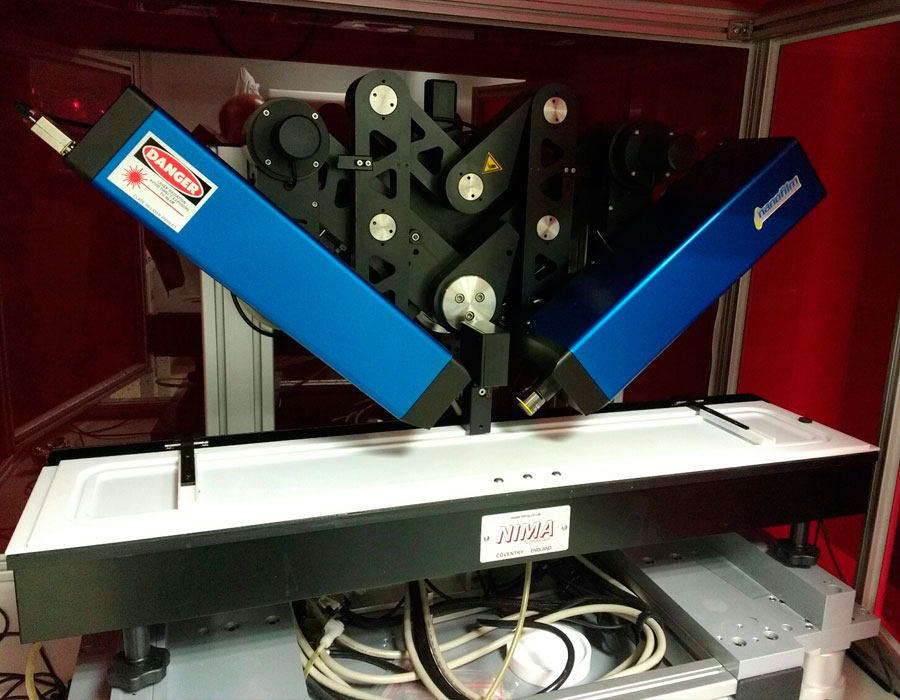 EP3-BAM from nanofilm is composed of a laser with wavelength 532nm, polarizers, shutter, 10x objective with focus scanner, analyzer, and CCD camera.
Precise control of the angle and work height is achieved with computer controlled software. The whole setup is assembled inside a closed cabinet. The Nima Langmuir trough is used to study the morphology of monolayers at different surface pressures with different subphase composition with a lateral resolution of 500 nm.
Ultra high resolution Electron Beam Lithography and SEM imaging system
 PIONEER TWO is a compact yet versatile electron beam system for uncompromised sub-10 nm lithography and ultra high resolution imaging by scanning electron microscopy. The electron optics offers unsurpassed low voltage inspection even below 1 keV. It is equiped with a highly precise laser interferometer controlled stage enabling high quality results in exposures, which require excellent pattern placement, stitching and overlay performance. It also includes and additional InLens special detector for imaging and mark recognition.
Evaporator in ultra-high vacuum (UHV). Metal and molecular evaporation chambers by Molecular Beam epitaxial (MBE) technique
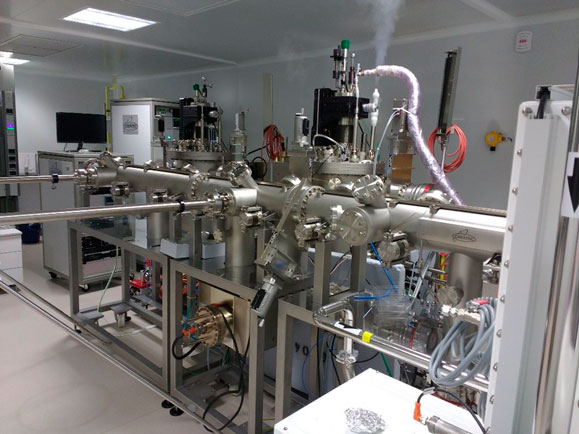 MBE-system is formed for two independent UHV chambers with a basis pressure of 1·10-10 mbar. One of them evaporate all kind of metals and metals oxide like AlOx and MoOx, in small areas and in areas up to 20 cm2. The second chamber is for molecular materials deposition. The setup affords the controlled deposition of ultra-thin films up to 0.5 nm thickness.
 The deposition system is specially design for the fabrication of hybrid structures, like spin-valve, spin-OLEDs, formed of thin layers of inorganic and molecular materials. The deposition system provides a nanometric control of the films thickness.
Clean atmosphere cabinet for electronic devices processing
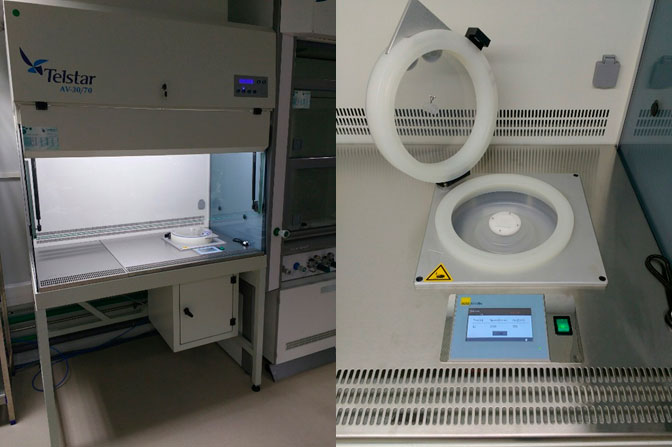 Vertical laminar flow cabin model AV30/70 from Telstar equipped with a spin coater SUSS LabSpin6 BM Bench mounted system for wafer up to 150 mm round or up to 100 mm square substrates. Speed: 100 - 8.000 rpm (+/- 1 rpm) with 150 mm chuck; acceleration 4.000 rpm/sec and spinning time: 1 s up to 999 s.
|
Characterization Techniques |
|
Mettler Toledo TGA/SDTA 851e Thermogravimetric and Differential Thermal Analyzer
 Mettler Toledo TGA/SDTA 851e model that operates in the range 25 - 1100ºC provided with an ultramicrobalance with sensitivity of 0.1 μg. FACT (Fully Automated Calibration Technology) automatic weight calibration integrated.
Simple and reliable operation. Parallel guided balance design compensates automatically for positioning errors. FlexCal automatically corrects for heating rate, type of crucible, module and purge gas. Rugged, horizontal furnace design minimizes influence of disturbing effects. Thermogravimetry (TGA) is a technique that measures the change in weight of a sample as it is heated or held at constant temperature. Its main use is to characterize materials with regard to their composition. SDTA allows simultaneous measurement of thermal effects and provides calorimetric data with high temperature accuracy.
Mettler Toledo DSC 821e Differential Scanning Calorimeter
 Mettler Toledo DSC 821e model that operates in the temperature range -150 - 500ºC equipped with a liquid nitrogen cryostat and a 200W furnace supply which allows maximum heating rates of 20ºC/min.
Ceramic sensor plate guarantees robustness and design flexibility. Circular thermocouple arrangement for excellent baseline stability without mathematical data manipulation. Provided with a robust 34-sample position autosampler robot for high sample throughput, reproducible sample handling and allowing 24-hour operation. Optic fiber option for photocalorimetry measurements.
SQUID magnetometer, model Quantum Design MPMS-XL-5
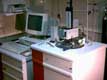 The Quantum Design MPMS 5XL SQUID Magnetometer is a very sensitive tool to measure the magnetization of materials, as a function of the temperature and magnetic field. The SQUID (Superconducting Quantum Interference Device) technology allows monitoring of very small changes in magnetic flux in order to discover the magnetic properties of samples.
 Operating in the temperature range of 1.8-400 K (maximum sweeping rate 10K/min) and magnetic fields up to ± 5T. AC/DC susceptibility and magnetization measurements with standard transport and RSO option (reciprocating sample option with enhanced sensitivity, 10-8 emu). Options: • Ultra low field capability. • Single crystal mounting device with horizontal and vertical rotator. • Magneto-optical measurements (fiber optic sample holder option). • Pressure cell for measurements under pressure up to 10 Kbar.
SQUID magnetometer, model Quantum Design MPMS-XL-7
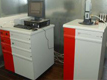 The modular MPMS design integrates a SQUID detection system, a precision temperature control unit residing in the bore of a high-field superconducting magnet, and a sophisticated computer operating system. Powerful software controls measurements, making data collection and analysis quick and easy. Easy-to-use software allows full automation of all system parameters.
 Main characteristics: • Temperature range of 1.8-400 K (maximum sweeping rate 10K/min) • Magnetic field up to ± 7T. • AC/DC susceptibility and magnetization measurements with standard transport and RSO option (reciprocating sample option with enhanced sensitivity, 10-8 emu). • Maximum Sample Size: 9 mm • Field Uniformity: 0.01% over 4 cm • Temperature Range: 1.9-400 K
Physical properties measurement system
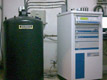 Model Quantum Design PPMS-9, able to perform:
• AC/DC susceptibily and magnetization measurements by using applied fields up to +\- 9 T (1.9-400 K) • AC/DC resistivity measurements by using applied fields up to +\- 9 T (0.35 - 400 K) • Heat Capacity measurements by using applied fields up to +\- 9 T (0.35 - 400 K) • Thermal transport measurements by using applied fields up to +\- 9 T (1.9 - 400 K) • Torque magnetometry measurements by using applied fields up to +\- 9 T (1.9 - 400 K)
X and Q band EPR spectrometer with additional Pulsed X-band, Model Bruker ELEXYS E580
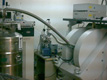 Operating in the temperature range 3 -300 K and applied magnetic fields up to 2T.
X and Q band microwave bridges (ESP049X, ESP 380 1010, ER051QG). ER 4112SHQ cavity for X-band (~9.3 GHz), ER5106 cavity for Q-band (~34 GHz). ESR900 (X-band) and CF935 (Q-band) top loading continuous flow cryostats. Pulsed X-Band experiments equipped with a ER 4118X-MD-5W1 cavity and a TWT amplifier. It is able to apply pulses between 0.7 ns and 15 μs width. Measurements of solid (powder o crystalline) samples and solutions. Crystal mounting option provided with a programmable control goniometer ER 218G1 (compatible with X-Band measurements). The field of application of the EPR is very extensive and provides qualitative and quantitative structural information. Useful applications in structural determination of metallic and organometallic compounds, studies of radicals and reaction mechanisms.
Attocube Low Temperature Magnetic Force Microscope (LT-MFM) and Low Temperature Scanning Tunneling Microscope (LT-STM)
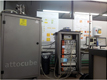 Attocube Scanning Probe Microscope (SPM) combines various scanning modes as atomic force microscopy (AFM), magnetic force microscopy (MFM) and scanning tunneling microscopy (STM) from room temperature to helium liquid temperature (4.2 K) under different ambient conditions (in air, inert gases or at high vacuum).
 The instrument works by scanning the sample below a fixed cantilever and by measuring its deflection with highest precision using a fiber based optical interferometer. Both contact and non-contact mode are applicable. The microscope uses a set of xyz-positioners for coarse positioning of the sample over a range of several mm and the piezo-based scanner provides a large scan range of 50 μm x 50 μm at room temperature, and 30 μm x 30 μm at liquid helium temperature. Moreover, it is possible to applied an external magnetic 2D vector field until 8 T in vertical and 2 T in horizontal direction.
Mössbauer Spectrometer
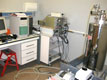 ARS (Advanced Research Systems) Helium Closed Cycle Mossbauer Cryostat (Operating Temperature Range between 8 to 355 K).
γ-Rays are provided by a 57Co(Rh) source. Recoil-Mössbauer Spectral Analysis Software. Mössbauer spectroscopy is based on the recoil-free nuclear resonance absorption of ? radiation and provides information of electronic, magnetic, and structural properties within materials.
X-ray diffraction platform
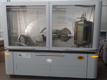 PANalytical Empyrean X-ray platform (Cu radiation source) with PIXcel detector and different experimental set-ups for:
• Capillary powder diffraction (transmission mode measurement), with a focusing mirror for enhanced intensity, and the possible combination with an Oxford Cryostream (temperature range: 100 K - 500 K). • High throughput stage (transmission mode measurement) with a focusing mirror for enhanced intensity. • Small-angle X-ray scattering (SAXS). • Grazing incident X-ray diffraction (GIXRD) with hybrid monochromator (Cu Kα1). • X-ray reflectometry
X-ray Diffractometer
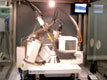 Rigaku Oxford Diffraction Supernova diffractometer (Mo radiation source) with a Sapphire CCD detector and a cryojet temperature controller (temperature range: 100 K - 400 K). The high-flux microfocus source allows the measurement of very small single crystals, which are mounted with the aid of a microscope with polarized light. The software CrysAlisPro is available for data reduction and analysis.
Fourier Transformation-Infrared Spectrometer NICOLET 5700 (Thermo Electron Corporation)
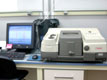 The FT-IR spectrometer can be used for transmission and reflection measurement. It is equipped with a KBr beamsplitter and two internal detectors: DTGS_KBr (4000 - 400 cm-1 spectral range) and MCT/A (4000 - 650 cm-1 spectral range), which can be selected with the software. For attenuated total reflection measurements, a VeeMAX II with ATR accessory (PIKE Technologies) is available. It permits variable angle of incidence and single reflection ATR for depth profiling studies. The system is equipped with a flat plate Ge 60º crystal and a manual polarizer ZnSe.
UV/VIS HP 8453
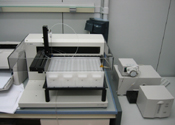 The spectrophotometer comes equipped with all the diode-array advantages - fast scanning, excellent sensitivity, virtually absolute wavelength reproducibility, exceptional ruggedness and reliability, minimum maintenance and open sample area, and significant improvements in optical performance. Better than two nanometer resolution, wavelength range of 190 to 1100 nm and less than 0.03 % stray light is standard.
Flexible accessories - Built-in interfaces for interconnectivity with accessories - Agilent's multicell transport, Peltier thermostatted cell holder, sipper system, or autosampler for example, and Gilson autosamplers, Labsphere diffuse reflectance accessories, or fiber optics couplers from Custom Sensors & Technology. Stable optics - Thermally stable ceramic spectrograph with one nanometer slit width from 190 - 1100 nm.
PHOTO-REACTOR: Side irradiation model (LZC-5)
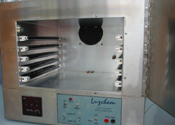 UV-Visible exposure tools for controlled irradiation of a wide range of materials.This unit is recommended for customers who only use liquid samples and who therefore prefer side irradiation. The irradiation chamber is approximately 12 inches wide, 12 inches deep and 8.5 inches high. Two switches allow control of the lamps used (8 lamps, 4 each side). An exhaust is needed when using UVC (254 nm) lamps. Fan is included. Different wavelength ranges in the UV and visible regions are available. The irradiation chamber is air-cooled, and the air flow design stabilizes the temperature about 3-4 degrees Celsius above room temperature.
SP1 TM HPFC FLASH chromatography purification system.
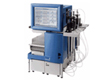 SP1 system is the latest FLASH chromatography technology for faster and easier purification of compounds in the range of milligrams to tens of grams. The system is equipped with four columns accommodating the broadest range of cartridge sizes. The SP1 system has a unique software features, including TLC-to-gradient with optimal loading, Wizard, Solvent and waste Monitoring, UV detector and the option of On-the-fly programming, which permits the change of the gradient while the purification is running.
Laser Flash Photolysis Model mLFP-111 Luzchem, Nd-YAG Brilliant Quantel.
 This transient absorption spectrometer has been developed for spectroscopic and kinetic laser flash photolysis measurements. It includes a ceramic xenon light source; 125 mm monochromator; Tektronix 9-bit digitizer TDS-3000 series with 300 MHz bandwidth; compact photomultiplier and power supply, Pentium computer with 17" monitor and back-up drive, cell holder and fiber optic connectors, fiber optic sensor for laser-sensing pretrigger signal, computer interfaces and the software needed to operate the system. The mLFP-111 instrument does not include the laser, but generates 5 volt trigger pulses suitable for most lasers, including the two-pulse sequence required for YAG lasers (flash lamps and Q-switch), with programmable frequency and delay. The m-LFP 111 is capable of recording all the transient signals normally acquired with conventional laser flash photolysis (LFP) systems, but in addition it can perform much better in long time scales.A nanosecond laser (Q-switched Nd:YAG laser, Brilliant) complements the laser flash photolysis system.
|
Molecular Nanomagnetism Laboratory |
|
Magneto-electroluminiscence (MEL) and magneto-transport equipment
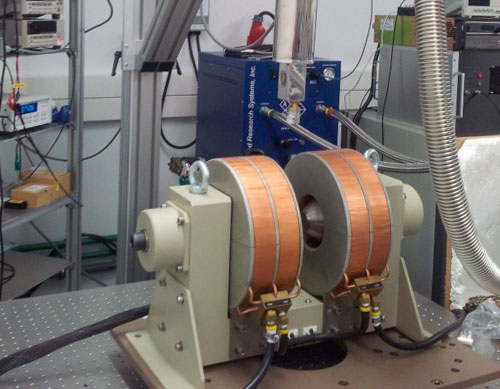 Set-up operating in the temperature range 4-400 K with external magnetic field up to 1 T. The equipment is home-made and has the possibility to measure electroluminescence materials at different temperatures and during the application of magnetic fields in different angles configurations. The set-up holds crystal windows where it is possible to perform transport measurements while laser irradiation is applied.
Kerr Magnetometer
 A Magneto-Optical Kerr Effect (MOKE) set-up allows to perform experiments in a temperature range between (4-400) K.
The polarization light rotation induced by magnetic field could be measured in longitudinal and polar geometries. With applied magnetic field ranging up to+/- 380 mT in longitudinal and +/- 160 mT in polar configuration. In transverse geometry the magnetization gives us information about the reflectivity changes of the samples.
Cervantes Fullmode Scanning Probe Microscope (Nanotec Electrónica)
 Nanotec Scanning Probe Microscope (SPM) equipped with a Phase Lock Loop, operates at room temperature in air or at high vacuum. Operating modes available are scanning tunneling microscopy (STM), atomic force microscopy (AFM, in Dynamic, Contact, Friction and Jumping modes), electrostatic force microscopy (EFM), conductive AFM (C-AFM) and Local Oxidation Nanolithography. There are scanners for three different areas: 4 x 4 µm2 (XS_SCAN_01), 17 x 17 µm2 (PDC_FAST_08) and closed-loop 63 x 63 µm2 (CL_SCAN_17).
Nanoscope IVa Multimode Scanning Probe Microscope (Bruker, former Veeco)
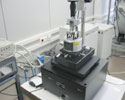 The microscope allows to acquire images on atomic, nanoscopic and macroscopic scales to measure surface characteristics as topography or adhesion. It works in air at room temperature in different operating modes: Scanning tunneling microscopy (STM), magnetic force microscopy (MFM) and atomic force microscopy (AFM). As an AFM it can be used in Dynamic (also known as tapping), Contact and Torsion modes. The equip is interfaced with a home-made voltage amplifier to perform Local Oxidation Nanolithography. A liquid cell is also available for electrochemical measurements. Two scanners can be used for different scanning areas: 10 x10 µm2 (manual 7337ENV) and 100 x 100 µm2 (fully motorized 8462JV).
NIKON Eclipse LV-100 Optical microscope
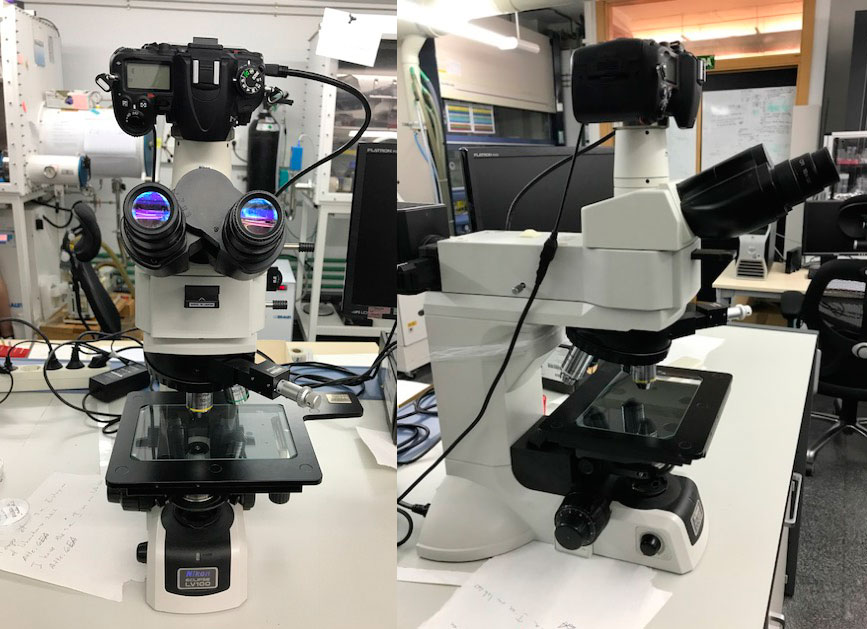 NIKON Eclipse LV-100 Optical microscope to work at bright field, polarized light and DIC (Differencial Interference Contrast/ Nomarski). Plan Fluor objectives with magnification of 10x, 20x, 40x, 50x and 100x. It is equiped with a digital camera: Nikon, D7000 AF-S DX NiKKOR 18-105mm f/3.5-5.6G ED VR.
Ramé-hart Model 200 Standard Goniometer with Dropimage Standard v2.3 equiped with an automated dispensing system
 This goniometer is a powerful tool for measuring contact angle and surface energy. This device includes DROPimage Standard softward as well as a fiber optic illuminator, 3-axis leveling stage, high-speed F4 Series digital camera, microsyringe fixture and assembly for manual dispensing. The system is improved with an automated dispensing system and manual tilting base options.
The DROPimage Standard software measures contact angle and includes a suite of surface energy tools including: the Acid-Base Tool, the Surface Energy Tool, the Work of Adhesion Tool, Zisman's Plot Tool, the Solid-Liquid-Liquid Surface Energy Tool, and the One-Liquid SE Tool.
GES5E Variable Angle Spectroscopic Ellipsometer
 The variable angle ellipsometer allows to measure as the main application: the thickness calculation of molecular materials, metals and inorganic materials layers, being its accuracy between the 0.1 nm from µm. Also the ellipsometer give the optical properties of the measurable samples giving information about the electronic structure like GAP position in molecular and inorganic semiconductors. The size spot is 65x80 ums and it is possible to check roughness samples. The measurable spectra is from 190 nm to 1700 nm.
Layer by Layer
 LbL technique is one of the most important techniques for the preparation of mixed multilayer films, taking advantage of the electrostatic interactions between the building blocks that compose the layers, in order to get a good control in the intercalation of the monolayers.
The KSVLMX2 is a dip-coater computer-controlled system that allows automatic preparation of mixed multilayer films. This commercial instrument has been completed with a vessel array of 3x16 units, and a three-clamp substrate holder, both of them home-built, making possible the preparation of three different samples simultaneously. In addition, a gas exit has been installed to be able to dry the samples. The system is placed in the clean room, inside a cabinet in order to limit the evaporation of solvents.
Probe station MPI TS150-TRIAX
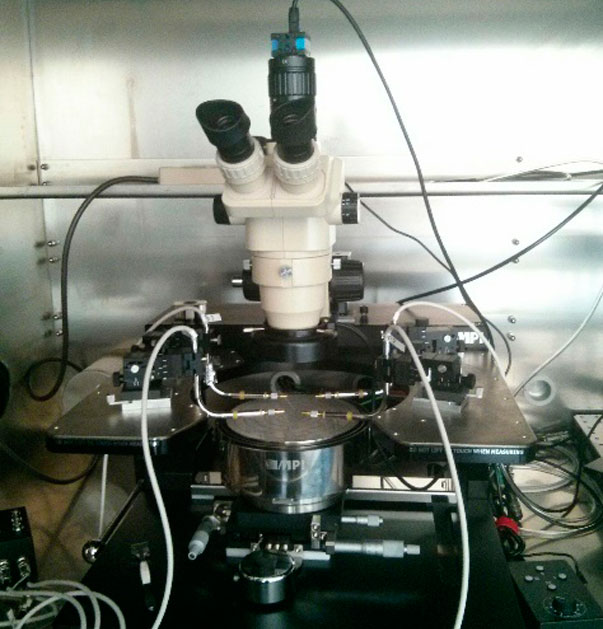 Probe station inserted inside a glove box for accurate and reliable DC/CV and High power measurements under inert atmosphere. A back-gate voltage can be applied on the chuck for FET characterization. It is compatible with wafers up to 6".
K&S 4523AD Programmable Digital Manual or Semiautomatic Wedge Bonder with Auto Stepback Y Axis
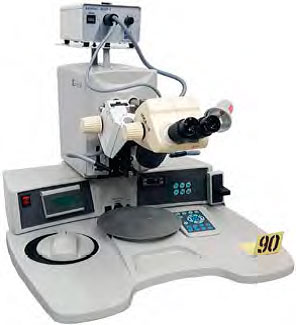 Standard or deep access wedge bonder tool. System manages 200 programs with up to six channels per program. Manual or semiautomatic operation. Motorized Y axis and programmable auto-stepback function for precise wire length and loop formation. Auto-second bond mode for complete single wire programmed sequence. Digital readout of all bonding parameters. Includes StereoZoom microscope with fiber optic illuminator and spotlight targeting.
|
Electrochemistry Laboratory |
|
Potentiostat / Galvanostat Autolab PGSTAT 12
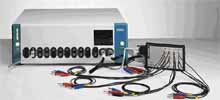 The potentiostat/galvanostat instruments are state of the art instrumentation that can be used for virtually all electrochemical applications.
The Autolab PGSTAT12 is controlled with the latest version of GPES software with all electrochemical techniques as well as data analysis and fit and simulation software. The PGSTAT12 is a low current and fast potentiostat/galvanostat capable of measuring maximum 250 mA, a current resolution of 30 fA on the 10 nA current rage and with a compliance voltage of 12 V. The PGSTAT12 also offers the possibility to do IR compensation (both i-Interrupt and Positive Feedback).
Potentiostat / Galvanostat Autolab 128N
 The potentiostat/galvanostat instruments are state of the art instrumentation that can be used for virtually all electrochemical applications.
The Autolab PGSTAT128N is controlled with the latest version of NOVA 2.1 software with all electrochemical techniques as well as sophisticated data analysis and fit and simulation software. The PGSTAT128N is a low current, low noise and fast potentiostat/galvanostat capable of measuring maximum 800 mA, a current range from 1 A to 10 nA and with a compliance voltage of 12 V. It’s possible to customize and enhance the capabilities of the PGSTAT128N by adding one or more of the many available optional modules or accessories. It also offers the possibility to do IR compensation (both i-Interrupt and Positive Feedback).
Gamry Interface 1000E
 The Interface 1000E is a full-featured potentiostat capable of performing all techniques, including electrochemical impedance spectroscopy.
 The Interface 1000E includes all techniques, including electrochemical impedance spectroscopy, for applications such as physical electrochemistry, electrochemical corrosion, battery testing, fuel cell testing, dye solar cell testing and sensor development. The interface 1000E is a low current, low noise and fast potentiostat/galvanostat capable of measuring maximum 1 A, a current range from 1 A to 10 nA and with a compliance voltage of 12 V. The Interface 1000E potentiostat can be configured as a single-channel potentiostat, bipotentiostat, or multichannel-potentiostat.
Gamry Interface 5000E
 The Interface 5000E potentiostat is a fully-featured potentiostat/galvanostat for battery testing. It is also ideally designed for testing of fuel cells and supercapacitors.
The Interface 5000E potentiostat is designed for cell-level testing of various energy storage and conversion devices and includes capabilities for monitoring both half cell voltages in addition to the whole cell voltage during an experiment. A second electrometer gives you the ability to monitor both half cells in a typical three electrode setup. You can monitor both the anode and cathode in addition to the entire cell in charge/discharge experiments and EIS experiments. The Interface 5000E is a fast potentiostat/galvanostat capable of measuring maximum 5 A, a current range from 5 A to 50 µA and with a compliance voltage of 6 V. The Interface 5000E can be configured as a single-channel potentiostat, bipotentiostat, or multichannel-potentiostat.
Electrochemical Quartz Crystal Microbalance (EQCM) CH Instruments, 400 Model
The quartz crystal microbalance (QCM) is a variant of acoustic wave microsensors that are capable of ultrasensitive mass measurements. Under favorable conditions, a typical QCM can measure a mass change of 0.1-1 ng/cm2. QCM oscillates in a mechanically resonant shear mode under the influence of a high frequency AC electric field which is applied across the thickness of the crystal. QCM and the combination of QCM with electrochemistry (EQCM) have been widely employed for the determination of metals deposited onto the crystal, studies of ion-transport processes in polymer films, biosensor developments, and investigations of the kinetics of adsorption/desorption of adsorbate molecules. In EQCM experiments, the measurements of the various electrochemical parameters, such as potential, current and charge at the working electrode, and the acquisition of the corresponding frequency change, are conducted simultaneously.
|
Growth Laboratory |
|
This laboratory is available with the following resources for the growth of single crystals by chemical vapour transport (CVT), direct vapour transport (DVT) and chemical vapour deposition (CVD):
Quartz Tube Sealer
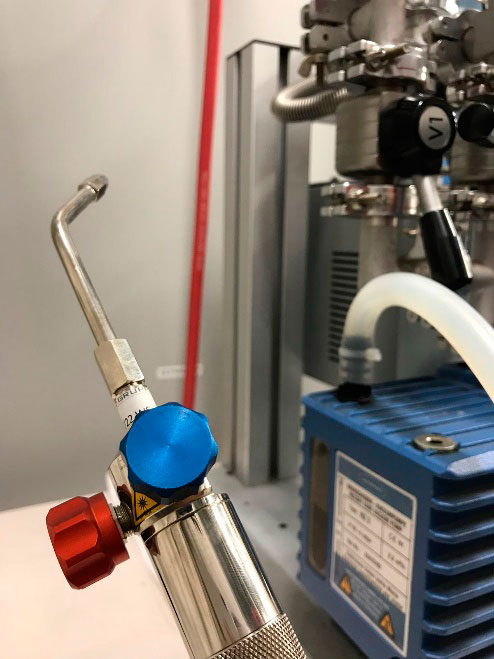 Hand blowtorch station for sealing quartz ampoules under dynamic vacuum. It features a pumping system with a diffusion pump and an oil roughing pump. It permits sealing reaction vessels at pressures as low as 10-4 torr.
Box furnace
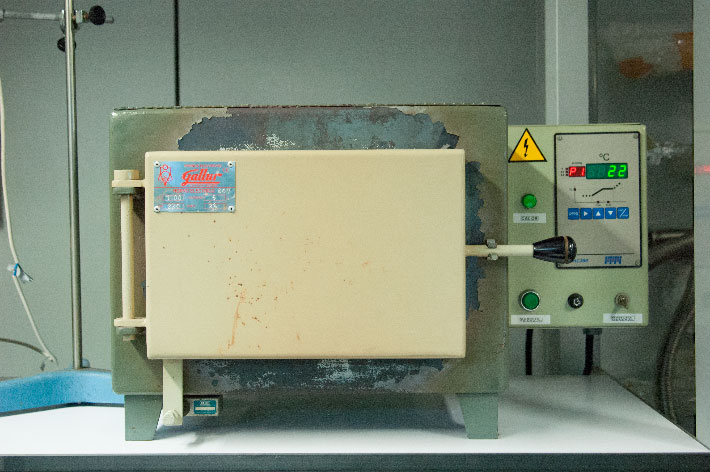 This furnace reaches temperatures of up to 1100ºC in a single box chamber. It is fully programmable, including 10 preset recipes.
Single zone tube furnace
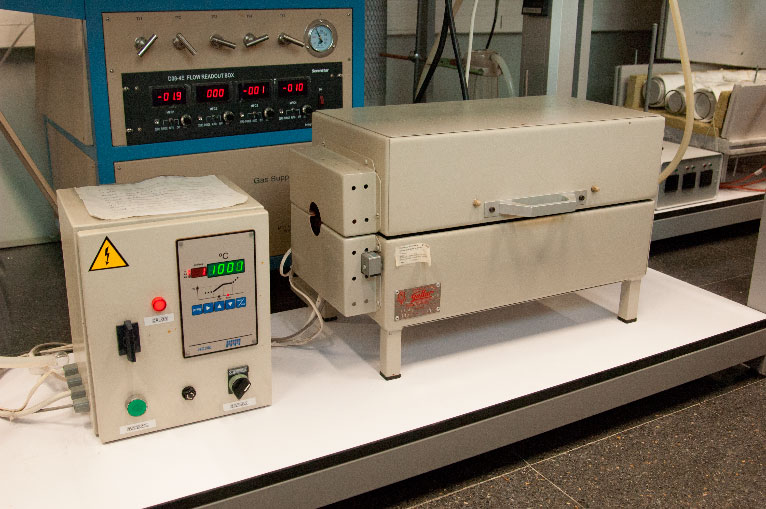 It includes a single set of heating elements that reach up to 1100ºC inside a tubular chamber of 28 mm of diameter. This geometry allows for gas inlet and exhaust in order to perform inert atmosphere annealing processes and chemical vapour deposition growth.
Three zone tubular furnaces
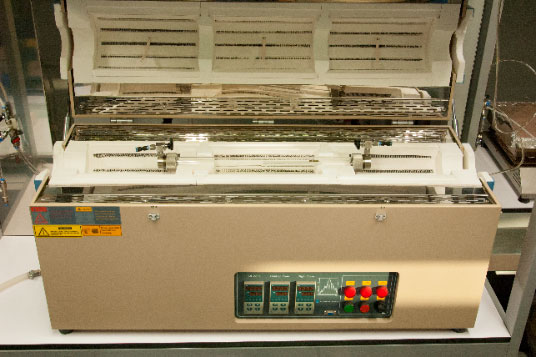 They include three independent sets of heating elements that allow establishing two temperature gradients across the main tubular reaction chamber (60 mm outer diameter). The maximum temperature in each independent zone is 1200ºC. The main tube is also fitted with vacuum/gas flanges that allow performing chemical vapour deposition-like processes.
|
2D Materials Laboratory |
|
Optical microscope Nikon Eclipse LV-100
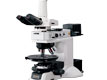 Manual optical microscope with episcopy (reflection) and transmission (transmission) modes. Includes objectives of high numerical aperture Fluor Plan (10x, 20x, 50x and 100x) and a DS-Fi3 CMOS high sensitivity high-resolution color digital camera (5.9 megapixel). This optical microscope is intended for the inspection of samples in an inert atmosphere and also allows to perform quantitative optical microscopy in thin films in combination with a set of band-pass filters in the visible spectrum.
|
Scientific workstations |
 It is a Super Hybrid Computer Cluster with the following services:
 - Servers like compute nodes based on Intel Xeon technology (20), and 6 Intel I7 - Servers like compute nodes based on AMD Opteron technology (4) - Gigabit connection network through Cisco Catalyst Switch 3560G - The cluster includes 268 calculation cores and a total memory of 542 GB offering a peak performance (Rpeak) of 900 GLOPS, which is almost a TFLOP peak performance added. - Storage consists of 66 TB on serial ATA 2 disks More info |